
The S&P 500 finished the week down 2.7% as investors reacted to the results of the midterm elections. Energy fell 12%, partly on hopes for an end to the Iran war, and technology fell 8.23%. Tech is the sector with the most to lose if Democrats follow through on calls to limit further expansion of AI data centers. Energy is exposed too, since those data centers were expected to drive much of the growth in natural gas demand. AI-related investment has accounted for nearly half of this year’s GDP growth, so a slowdown in AI capital spending could spread to other sectors and drag on the broader economy.
The reality is that election outcomes rarely matter as much as either side expects. What politicians actually deliver is never as good as you hope when your team wins, or as bad as you fear when it loses. Which changes get made at the state and federal levels, and how they affect the economy, is only speculation at this point.
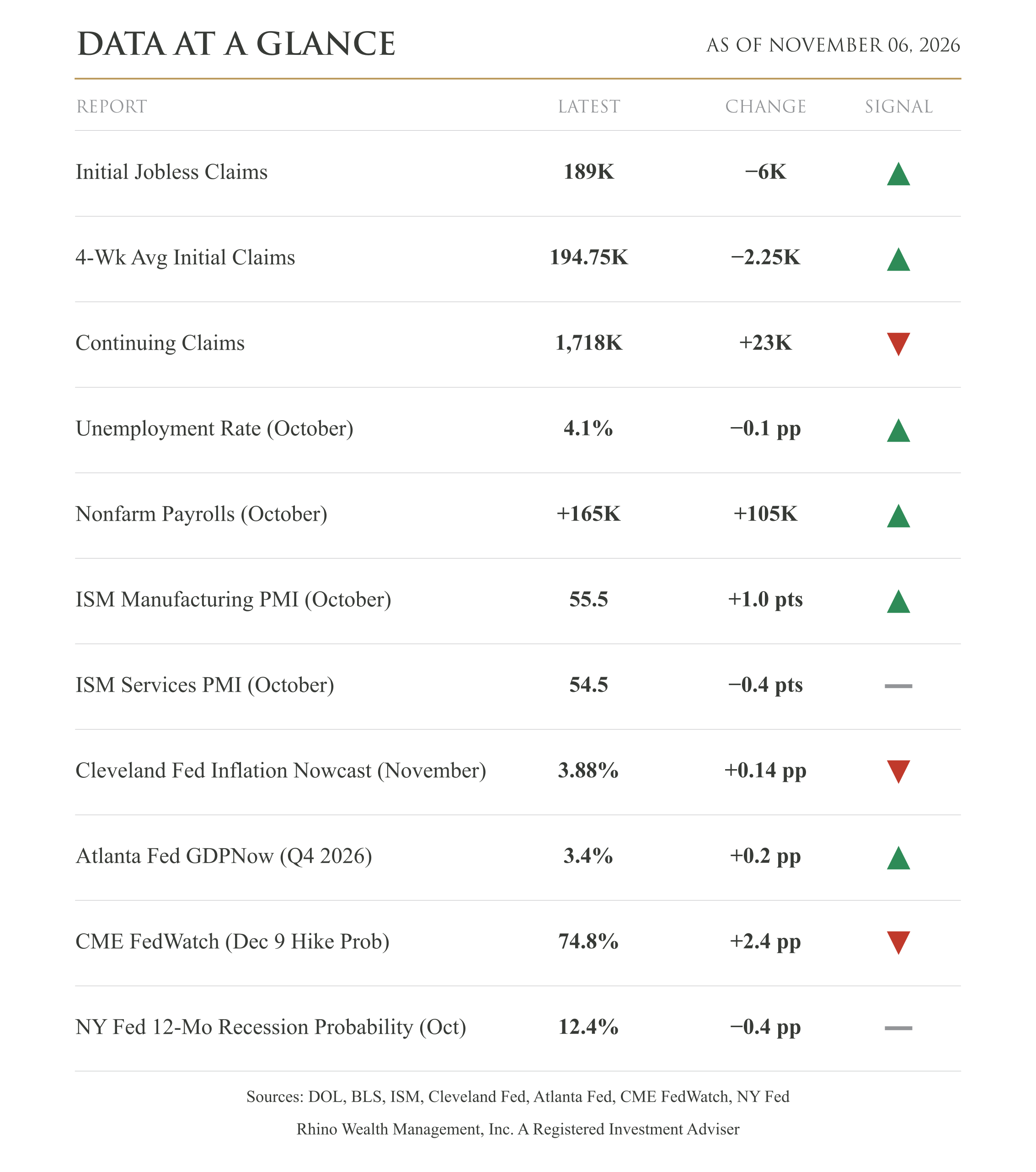
The economy is strong with no signs of slowing which will keep pressure on inflation and the Fed to raise rates.
The job market is solid. Hiring jumped in October, and layoffs remain low and the unemployment rate fell to 4.1%.
Factories are busier, and growth for the rest of the year is tracking well above average.
Inflation is drifting higher rather than cooling, and a strong economy gives the Fed little reason to back off.
Markets now expect another rate hike in December, so I think the bigger risk from here is rates staying high for longer, not a recession.
Tuesday's inflation report will tell us a lot about whether that hike happens.
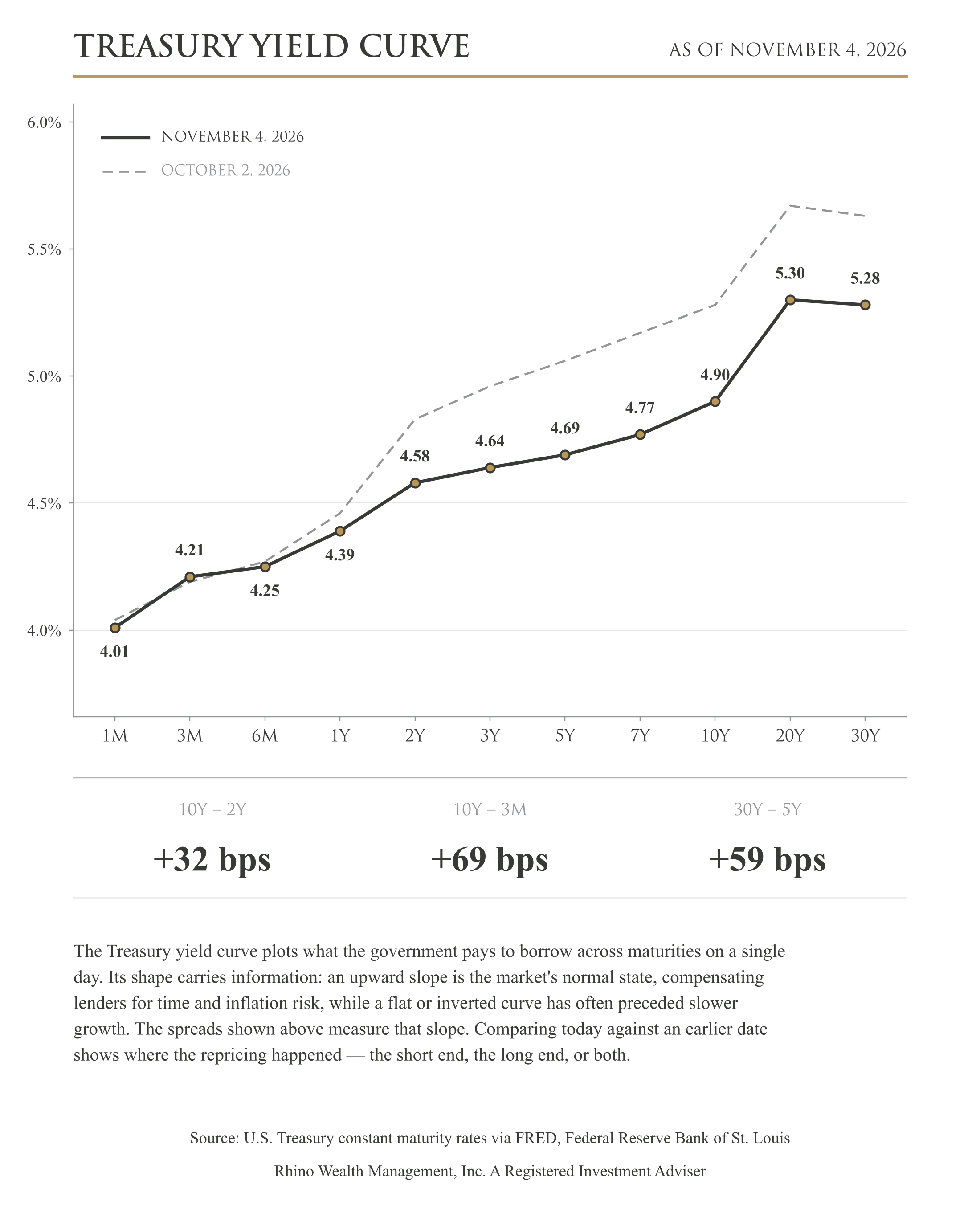
Interest rates fell over the past month, mostly for longer-term bonds, while short-term yields tied to the Fed barely moved. The 10-year yield, which mortgage rates follow, dropped from 5.28% to 4.90%, its biggest monthly decline since 2023. Investors moved money into bonds for safety as Middle East tensions rose and doubts grew about whether AI spending has gotten ahead of itself. Some also now question how many more rate hikes the Fed can make with high oil prices squeezing the economy. With long-term rates falling faster than short-term rates, the gap between the 10-year and 2-year yields narrowed from 0.45 to 0.32 percentage point.
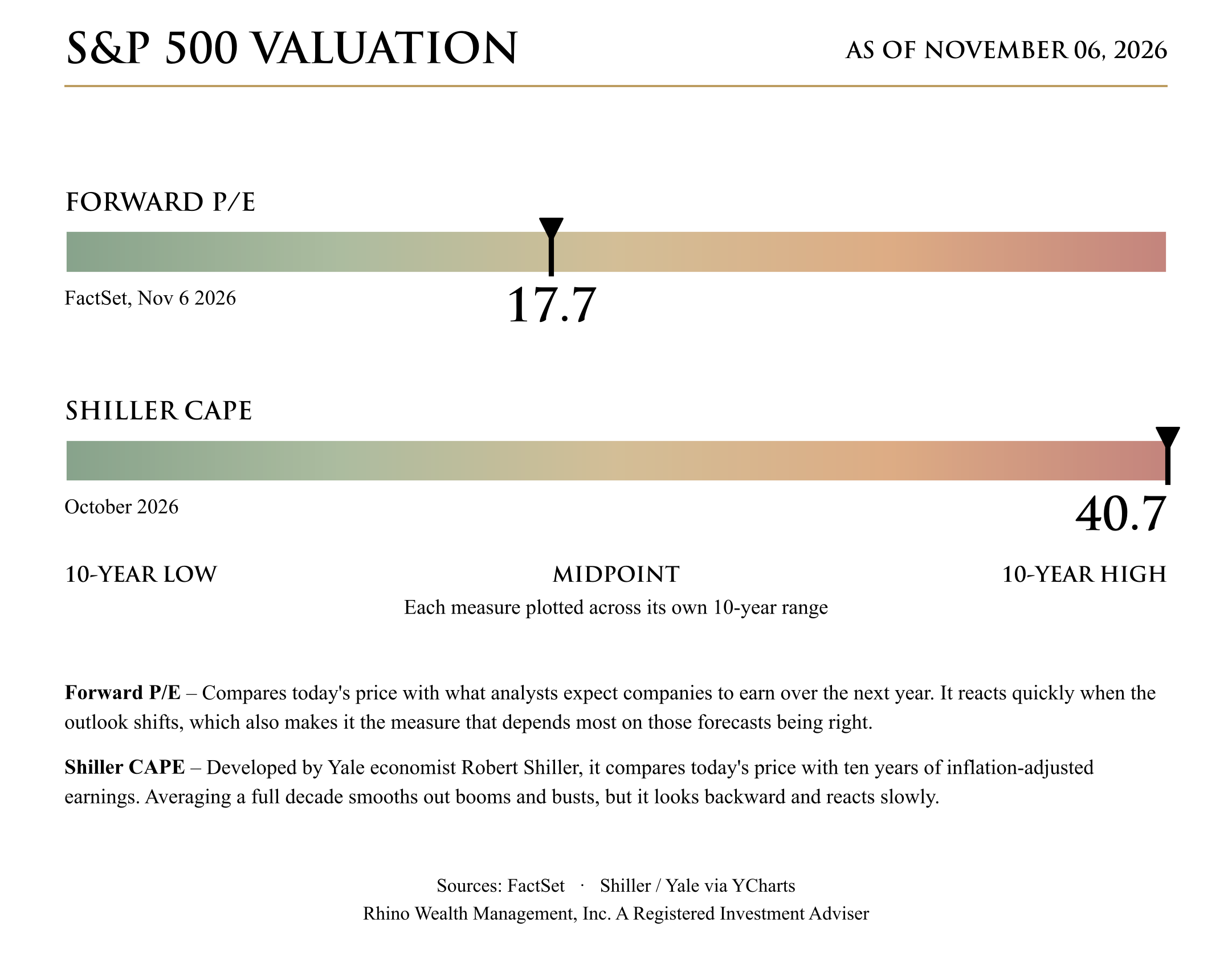
Stocks look cheaper than they did in January, but not because prices fell. Company earnings have grown much faster than stock prices, which has pulled the forward P/E, based on next year’s expected earnings, toward the low end of its recent range. The Shiller CAPE looks back at a decade of earnings instead, and by that measure the market is at its most expensive level in ten years. Both readings are accurate, and the gap comes down to whether this year’s earnings boom, driven largely by oil prices and AI chips, can last. Analysts already expect growth to slow sharply next year, and the midterm results could shift that outlook for some companies; if growth does slow, today’s cheap-looking market won’t look so cheap.
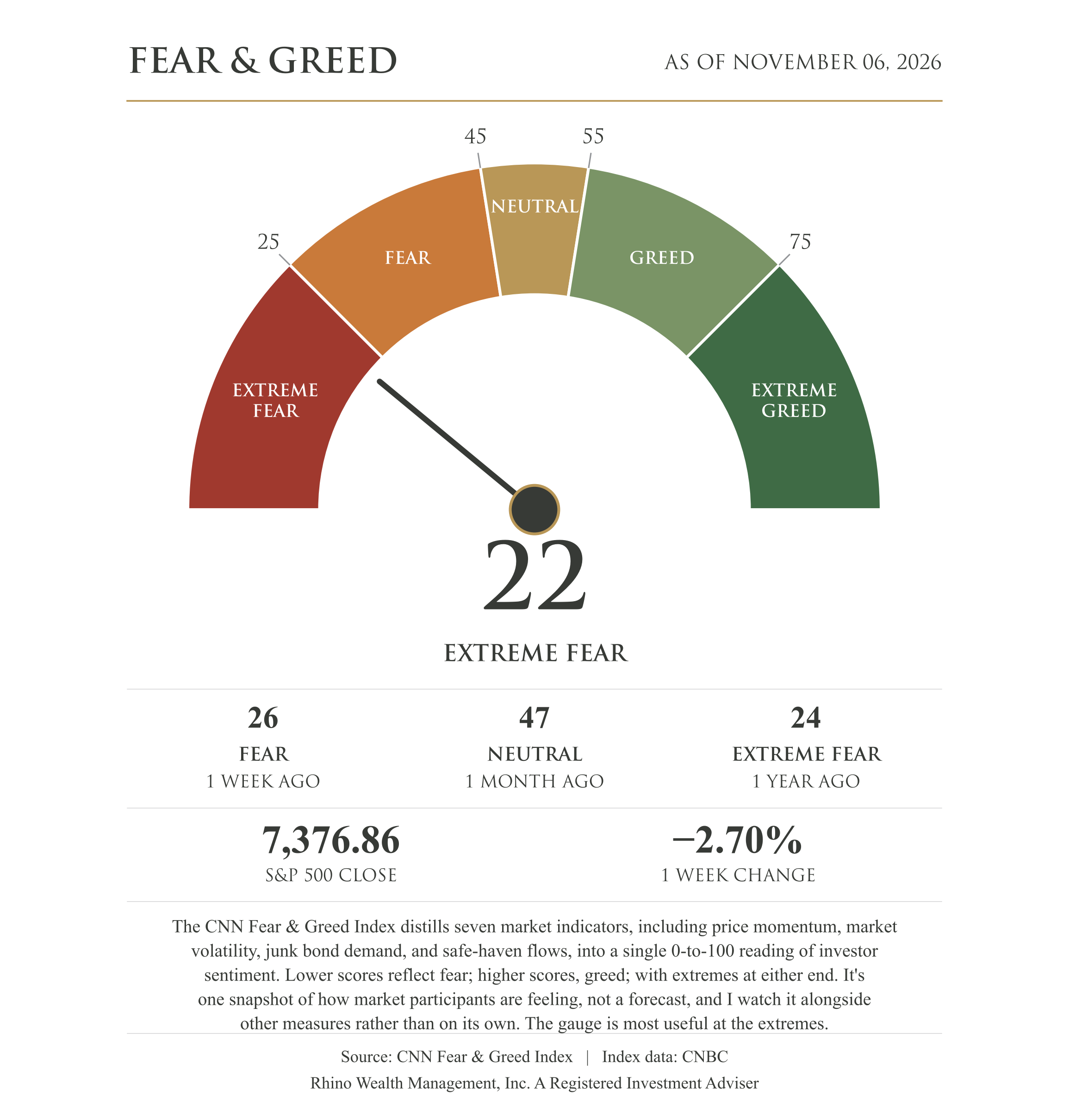
Investor sentiment turned sharply over the past month. The CNN Fear & Greed Index sat at a neutral 47 a month ago, slipped to 26 last week, and closed this week at 22, in extreme fear. The S&P 500 fell 2.7% for the week to 7,376.86, so prices and mood moved lower together.
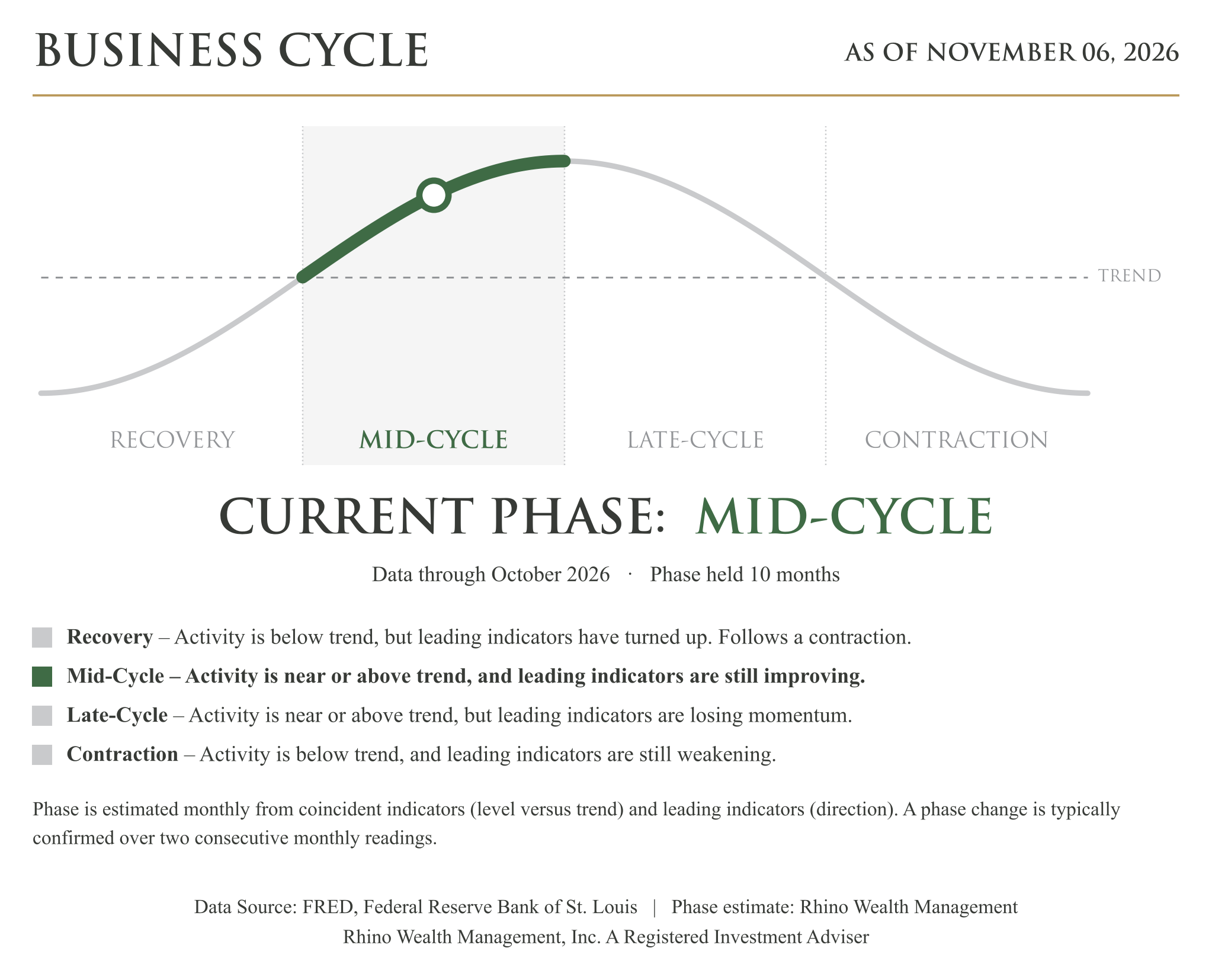
Our business cycle model still reads mid-cycle, where it’s been since January, meaning the economy is growing near its long-term pace and the indicators that tend to lead it are still pointing up. Orders for business equipment are well above their 10-year norm, layoffs remain low, and long-term rates sit comfortably above short-term rates. The picture is less clear than a few months ago, though, as the improvement in those leading indicators has slowed to a crawl. Building permits are soft, and the extra interest investors demand to lend to riskier companies has crept up since summer. If the leading indicators turn down for two straight months, the model would move to late-cycle, so I’ll be watching the next couple of jobs reports closely.
Next week, the BLS releases October inflation data, which is expected to show that inflation remains stubbornly high and may still be rising. With a strong economy and labor market, the Fed has room to stay focused on inflation, and further rate hikes look likely.
Disclosure:
This material is provided by Todd Van Der Meid, MBA, CFP®, through Rhino Wealth Management, Inc., a Registered Investment Adviser, solely for informational purposes. It is not intended as investment, tax, legal, or accounting advice. Investors should consult qualified professionals before making financial decisions.
Opinions expressed herein are general in nature and not tailored to individual circumstances. Investment strategies discussed may not be suitable for every investor. All investments carry risk, including possible loss of principal, and past performance does not guarantee future results. No investment strategy or risk management technique ensures profit or eliminates risk in all market conditions.
Investments in foreign or emerging markets involve additional risk, such as currency fluctuations, geopolitical instability, and varying accounting standards. Sector-specific investments can be more volatile due to their concentrated nature. References to indexes are for illustrative purposes; indexes are unmanaged, cannot be invested into directly, and their performance does not reflect fees, expenses, or sales charges. Index performance is not indicative of specific investment performance.
Economic forecasts and forward-looking statements reflect current views and assumptions and are subject to change. Actual results may vary materially due to market or other conditions. There is no obligation to update forward-looking information.
Information presented herein comes from reliable third-party sources but is not guaranteed for accuracy or completeness. Rhino Wealth Management, Inc. disclaims liability for errors or omissions. Portions of this content may be generated using advanced analytical tools, including artificial intelligence, and all such content has been reviewed and validated by Todd Van Der Meid, MBA, CFP®, using proprietary quality-control measures. Rhino Wealth Management, Inc. does not directly hold securities; however, securities mentioned may be included within recommended portfolio models or held by clients. Please refer to our Form ADV for additional details regarding potential conflicts of interest.